Medically Reviewed by Dr. Gina Rossetti, Medical Director Last reviewed: August 2026
Dual diagnosis treatment at Ojai Recovery treats a substance use disorder and a mental health condition together, in one coordinated plan. Our Oak View facility offers medical detox, residential treatment, a Ventura partial hospitalization program (PHP), and outpatient care under a physician-led medical team. Care is confidential, and admission is often available the same day.

2 reviews
3 months ago
This place has changed my life! I never envisioned having an awakening until I came to this place. It is the best place in Ventura County. They have the most amazing staff who go out of their way to be there for you I personally Experienced so much love from them..extra bonus best food ever!

1 review
2 months ago
As a parent, I am so grateful to Ojai Recovery. My son they did help when I was almost desperate. He’s just hit one year sober and is doing great.

62 reviews
A month ago
Beautiful property! Staff is absolutely amazing and will help anyway they can!! A++
1 review
2 months ago

1 review
A day ago
Dual diagnosis, also called a co-occurring disorder, means you have a substance use disorder and a mental health condition at the same time. Treating them together in one plan keeps progress in one area from being undone by the other. Your assessment identifies which symptoms are driving the picture now and where care should start.
The two conditions rarely sit still while you treat one of them. Anxiety that goes untreated can pull you back toward drinking. Drinking that continues can deepen a depression. An integrated program works on both at once, with one team and one plan.
Dual diagnosis treatment is for adults whose substance use and mental health symptoms are tangled together, where treating one alone has not held. Common signs:
None of these confirms a diagnosis on its own. A clinical assessment does, and you can start one with a phone call.
Treatment begins with an assessment of your substance use, mental health symptoms, medical history, and current needs. This helps your care team understand how the two conditions may interact and develop a treatment plan that addresses both.
As treatment progresses, therapy and clinical support can help you recognize triggers, manage difficult emotions, and develop healthier coping strategies. Addressing both conditions together gives you the opportunity to work on the underlying challenges while building practical skills for continued recovery.
Separate providers who never speak to each other leave you to translate between them. Integrated care removes that job:
Integrated care means your medical and clinical teams work from the same plan rather than two parallel ones. What that looks like here:
More on our approach to mental health and co-occurring care.
Dual diagnosis care is not one program. It is a sequence, and where you start depends on what your assessment finds. All levels run under medical supervision and safety protocols at our Oak View facility, except the partial hospitalization program, which runs in Ventura.
Level of care | What it is | Structure | Who it fits |
|---|---|---|---|
Medical detox | Physician-supervised withdrawal management | Short-term, monitored around the clock | You need to stop substance use safely before clinical work can begin |
Residential treatment | Live-in care with structure and support around the clock | Full-time | You need daily structure and distance from triggers |
Partial hospitalization program (PHP), Ventura | Structured daytime clinical programming | Intensive days, evenings at home | You are stable enough to sleep at home but need intensive daily care |
Outpatient treatment | Therapy and skills work while you live at home | Part-time, several days a week | You need continued support while working or caring for family |
Most people move through more than one level. Your assessment sets the starting point, and your team adjusts as stability grows.
We are a small, community-based program in Oak View, four miles from Ojai in Ventura County.
Withdrawal is managed by our Medical Director, a physician with addiction medicine experience, alongside an LCSW Clinical Director.
Near Lake Casitas, built around the Social Model of Recovery with holistic modalities including yoga, breathwork, expressive arts, and experiential outings.
Joint Commission accredited, DHCS licensed #560086BP, LegitScript certified.
In network with Medi-Cal and select private carriers. Private insurance and self-pay accepted.
A boutique, community-based program with same-day admission and 24/7 support.
Ojai Recovery 158 Rockaway Rd Oak View, CA 93022 (805) 273-8798
Our addiction recovery programs are designed to help you slow down, focus inward, and find balance. In the heart of Ojai’s natural beauty, you’ll experience an environment that nurtures both mind and body, with gentle mountain breezes, open skies, and quiet moments that remind you how good life can feel.
We serve adults across Ventura County, including Ojai, Ventura, Oxnard, Camarillo, Thousand Oaks, Simi Valley, Santa Paula, Fillmore, Port Hueneme, Moorpark, and Oak Park; Santa Barbara County, including Santa Barbara, Goleta, Carpinteria, and Summerland; and the western edge of Los Angeles County, including Agoura Hills, Westlake Village, and Chatsworth.
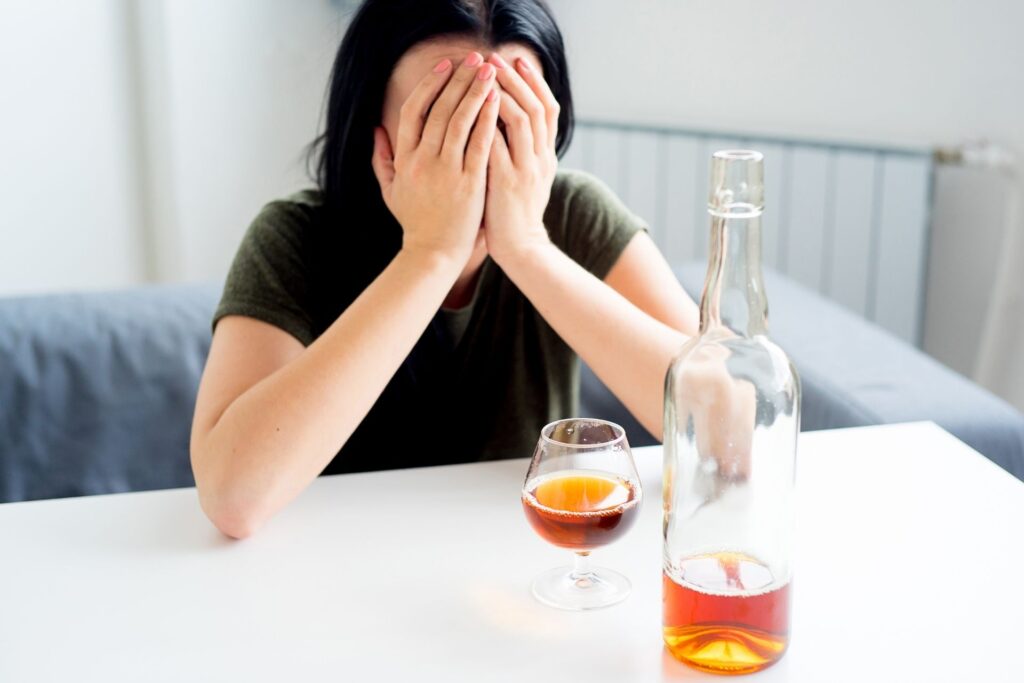
Chronic drinking, binge drinking, or self-medicating with alcohol often masks deeper emotional pain. We offer medical detox and trauma-informed therapy to help clients safely stop drinking, and rediscover life without it.

Stopping benzodiazepines suddenly can be dangerous. Our program manages the taper under medical supervision, with clinical support for the anxiety and sleep problems that often sit underneath the dependency.

Cocaine use tends to escalate in cycles, with the crash driving the next use. Treatment focuses on breaking that pattern, stabilizing mood, and rebuilding the routines cocaine pushed aside.

Fentanyl dependency builds quickly and withdrawal is difficult to get through alone. Our medically supervised detox manages that safely, with continued care to protect the stability you gain.

Cannabis dependency is easy to dismiss and hard to stop when motivation, sleep, and mood have shifted around it. Treatment here takes it seriously, without judgment.

Long-term methamphetamine use takes a heavy toll on thinking, sleep, and mood, and recovery is not fast. Care here combines residential structure with treatment for the mental health effects.
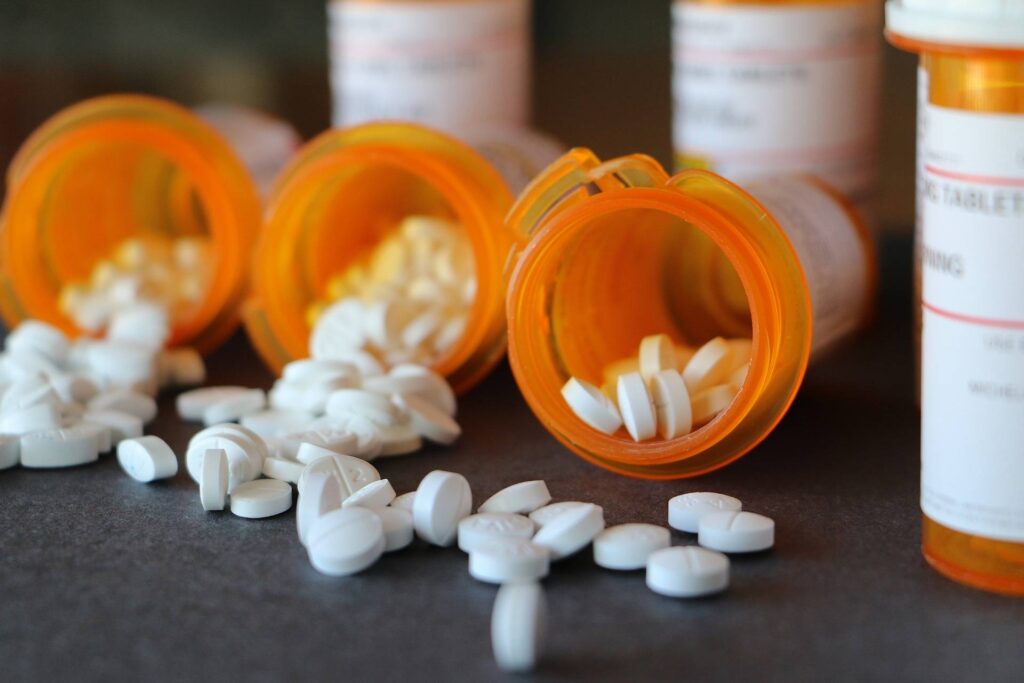
From heroin to fentanyl to prescription painkillers, opioid addiction requires careful detox, medication-assisted care when appropriate, and strong emotional support to address the trauma that often drives use.
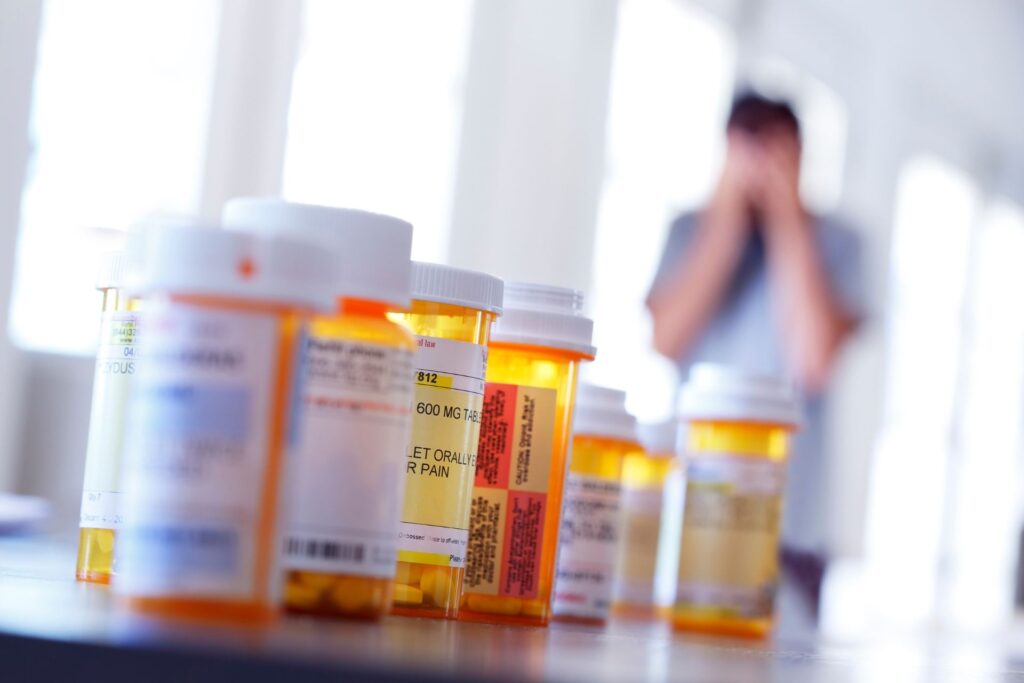
Whether painkillers, benzos, or ADHD medications, prescription drug misuse can quickly spiral into dependence. We treat this with clinical precision and deep compassion, focusing on both physical detox and emotional healing.
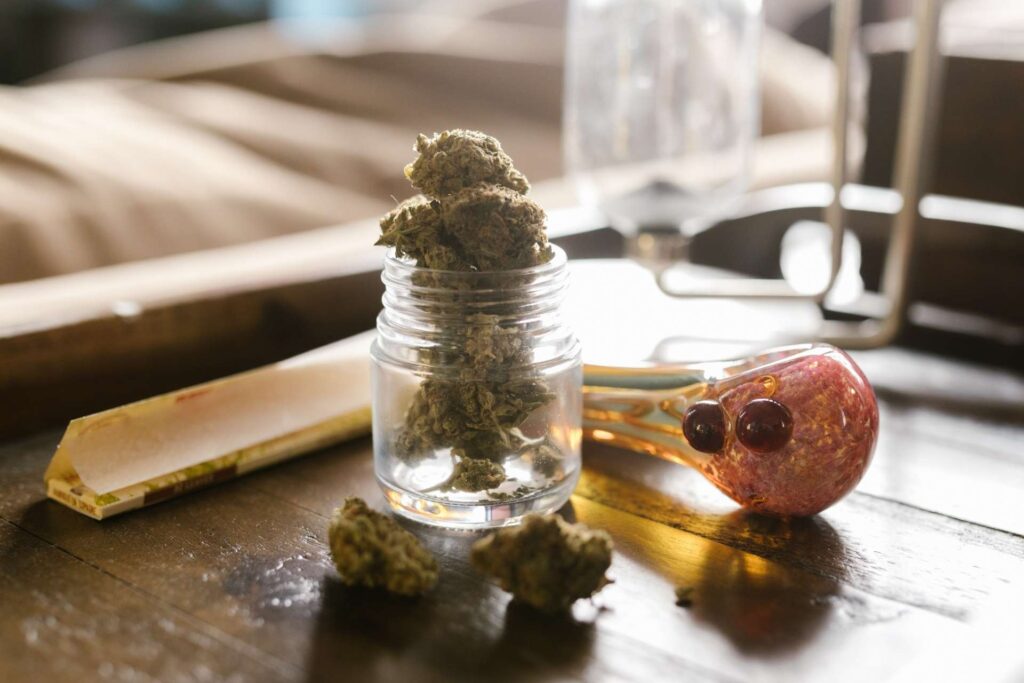
For those who feel emotionally dependent on cannabis, our program offers clarity, structure, and the chance to reconnect with purpose and energy beyond the haze.
Cocaine, methamphetamine, and amphetamines can take a major toll on mental and emotional health. Our program helps clients rebuild from the psychological and neurological impact of long-term stimulant use.
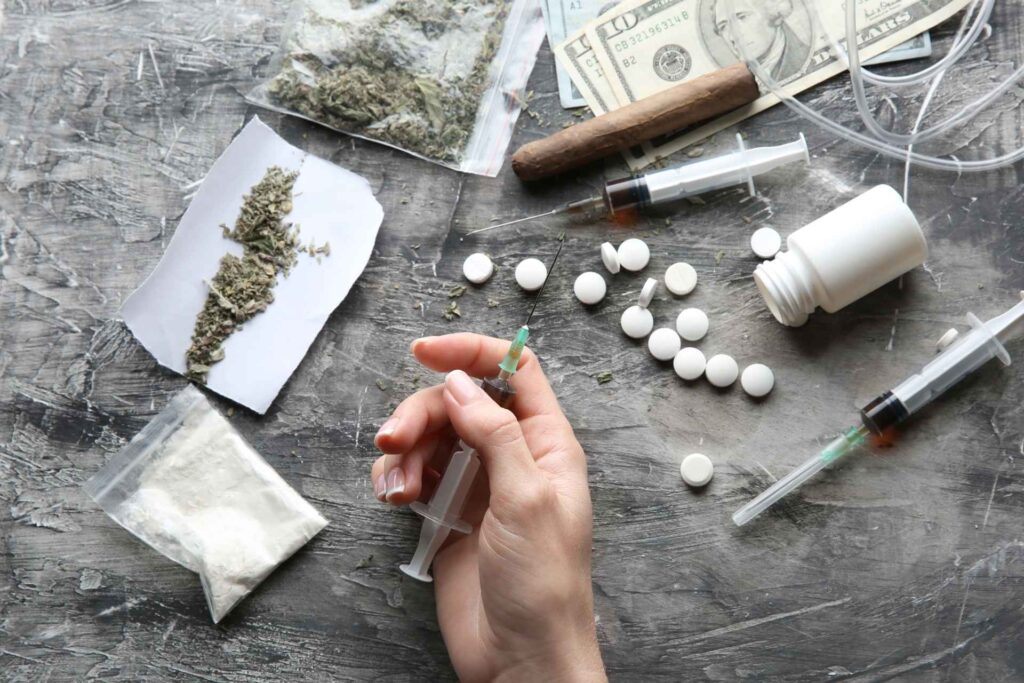
For those facing both substance use and mental health challenges (like depression, anxiety, trauma, or bipolar disorder), we offer fully integrated care with licensed professionals who understand both sides of the story.
Co-occurring disorders do not have a single cause. SAMHSA’s 2024 National Survey on Drug Use and Health found that 21.2 million adults, 8.1 percent of US adults, had both a mental illness and a substance use disorder in the past year, which is why integrated treatment exists as its own model. Common risk factors include:
Days follow a predictable rhythm: clinical groups, individual sessions, meals together, and time outdoors. The program is built on the Social Model of Recovery, which means you practice recovery alongside other people rather than in isolation. Holistic work sits beside clinical work, including yoga, breathwork, expressive arts, and experiential outings near Lake Casitas.
Our admissions team answers 24/7, and the conversation is confidential.
We run a free benefits check and explain what your plan covers in plain language.
A comprehensive evaluation looks at substance use, mental health symptoms, withdrawal risk, and safety, then recommends a starting level of care.
Withdrawal is managed under physician supervision before deeper clinical work begins.
You enter the level that fits, with one integrated plan covering both conditions.
As stability grows, you move to a lighter level while rebuilding routines.
Your discharge plan names ongoing providers, meetings, and supports in your area.
Ojai Recovery is in network with Medi-Cal and with select private carriers, and we also accept private insurance and self-pay. Network status and benefit levels vary by plan, so the fastest way to know what yours covers is a free, confidential benefits check.
How the benefits check works
We do not quote coverage or cost before a benefits check is complete.
Ojai Recovery operates as a single dual diagnosis treatment center in California, Joint Commission-accredited and based in Oak View near Ojai. Patients travel here from across the state, including Santa Barbara, Thousand Oaks, Simi Valley, Malibu, Los Angeles, Orange County, San Diego, and San Luis Obispo, because the medical detox, residential treatment, PHP, and outpatient levels of care stay under one team for the whole stay.
A free, confidential benefits check works the same way no matter which California county you are calling from, and same-day admission is often available.
Often, yes. We are in network with Medi-Cal and select private carriers, and we accept private insurance and self-pay. Network status and benefit levels vary by plan, so we run a free, confidential benefits check and tell you what your plan covers before you decide.
Not always. It depends on what you have been using, how much, and for how long. Your assessment includes a withdrawal risk check. If detox is indicated, it happens under physician supervision first, then you move into residential or day treatment.
Residential treatment is live-in care with structure and support around the clock. A partial hospitalization program is intensive daytime clinical programming with evenings at home. Residential fits when you need distance from triggers. PHP fits when home is stable enough to return to nightly.
Length depends on your starting level of care, your goals, and how you progress. Your team sets an initial plan at assessment and adjusts it as stability grows. Most people move through more than one level rather than finishing at the one where they started.
Often, yes. Same-day admission is frequently available depending on assessment findings and availability at the time you call. The fastest path is to call (805) 273-8798, complete the benefits check, and complete the clinical assessment in the same conversation.
Yes. Your inquiry, your assessment, and your treatment are confidential and protected by federal privacy law. Family members are involved only with your consent. You can call to ask questions without committing to admission.
This page is for general information and is not a substitute for professional medical advice, diagnosis, or treatment. Always speak with a qualified clinician about your situation. If you are in crisis or believe you may be experiencing a medical emergency, call 911 or dial 988 for the Suicide and Crisis Lifeline.
Substance Abuse and Mental Health Services Administration. Highlights for the 2024 National Survey on Drug Use and Health. Rockville, MD: Center for Behavioral Health Statistics and Quality, SAMHSA; 2025. https://www.samhsa.gov/data/sites/default/files/NSDUH%202024%20Annual%20Release/2024-nsduh-nnr-highlights.pdf. Accessed August 31, 2026.