





Yes. 7-OH (7-hydroxymitragynine) acts on the same brain receptors as prescription opioids and heroin, and regular use can produce tolerance, physical dependence, and opioid use disorder. If concentrated 7-OH products have taken hold for you or someone you love, 7-OH addiction treatment at Ojai Recovery starts with a medical assessment, not a lecture.
TL;DR 7-OH is a kratom alkaloid roughly 13 times more potent than morphine in lab assays. It is sold over the counter, it is not yet federally scheduled, and it causes opioid-type dependence and withdrawal. Treat it like an opioid.
Key Takeaways
- 7-OH is an opioid agonist. Dependence and withdrawal are expected with regular use, not unusual.
- Concentrated extracts and tablets are far stronger than kratom leaf, which is where most of the risk sits.
- Stopping abruptly after heavy use, or alongside alcohol or benzodiazepines, is the dangerous scenario. That is when supervised detox matters.
- The fastest way to find out what care is available to you is a free, confidential benefits check, or call (805) 273-8798.
What 7-OH is, and why it is stronger than kratom
7-hydroxymitragynine is a minor alkaloid found in the kratom plant and an active metabolite the liver produces from mitragynine, kratom’s primary alkaloid. It binds the mu-opioid receptor with far greater potency than mitragynine does.
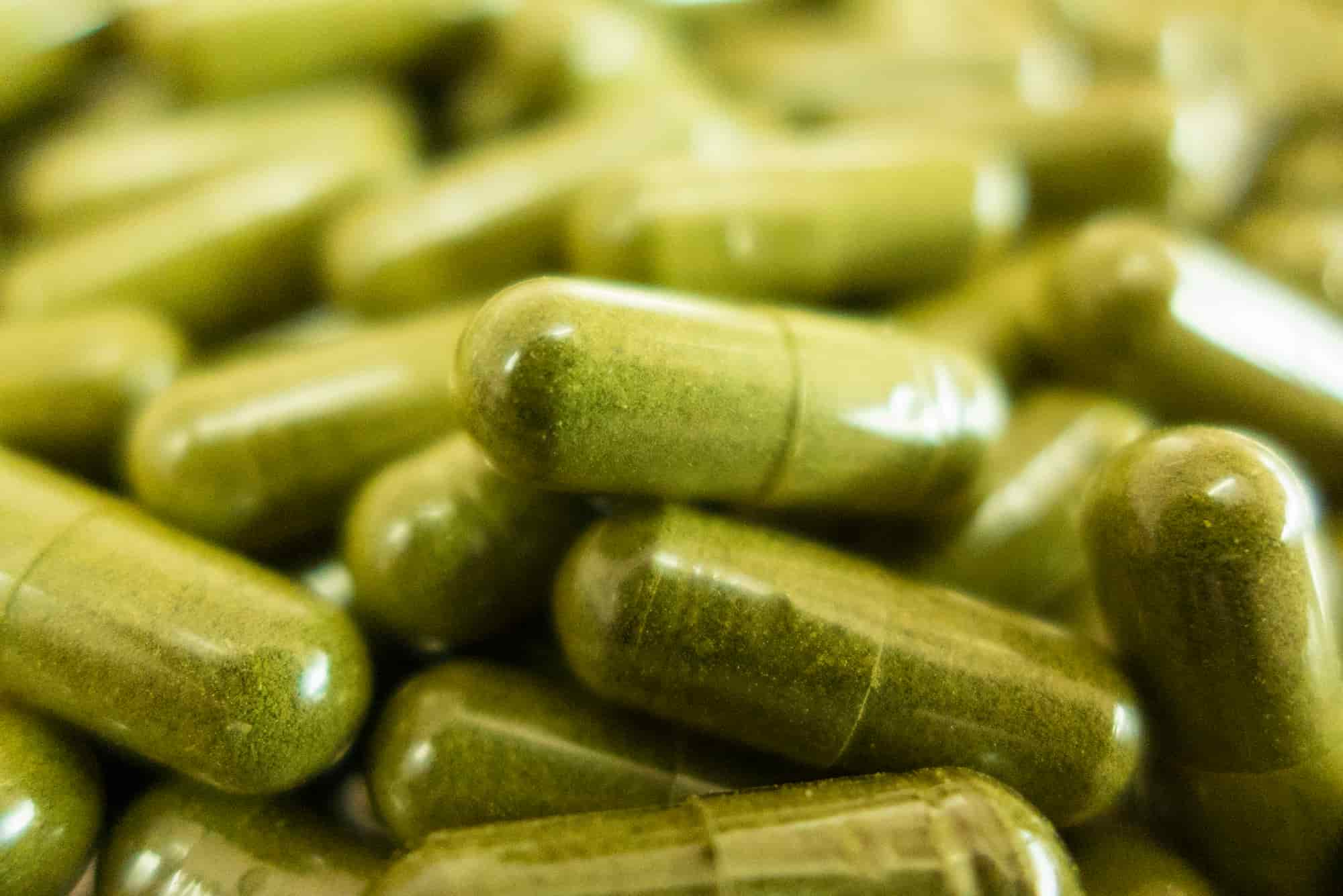
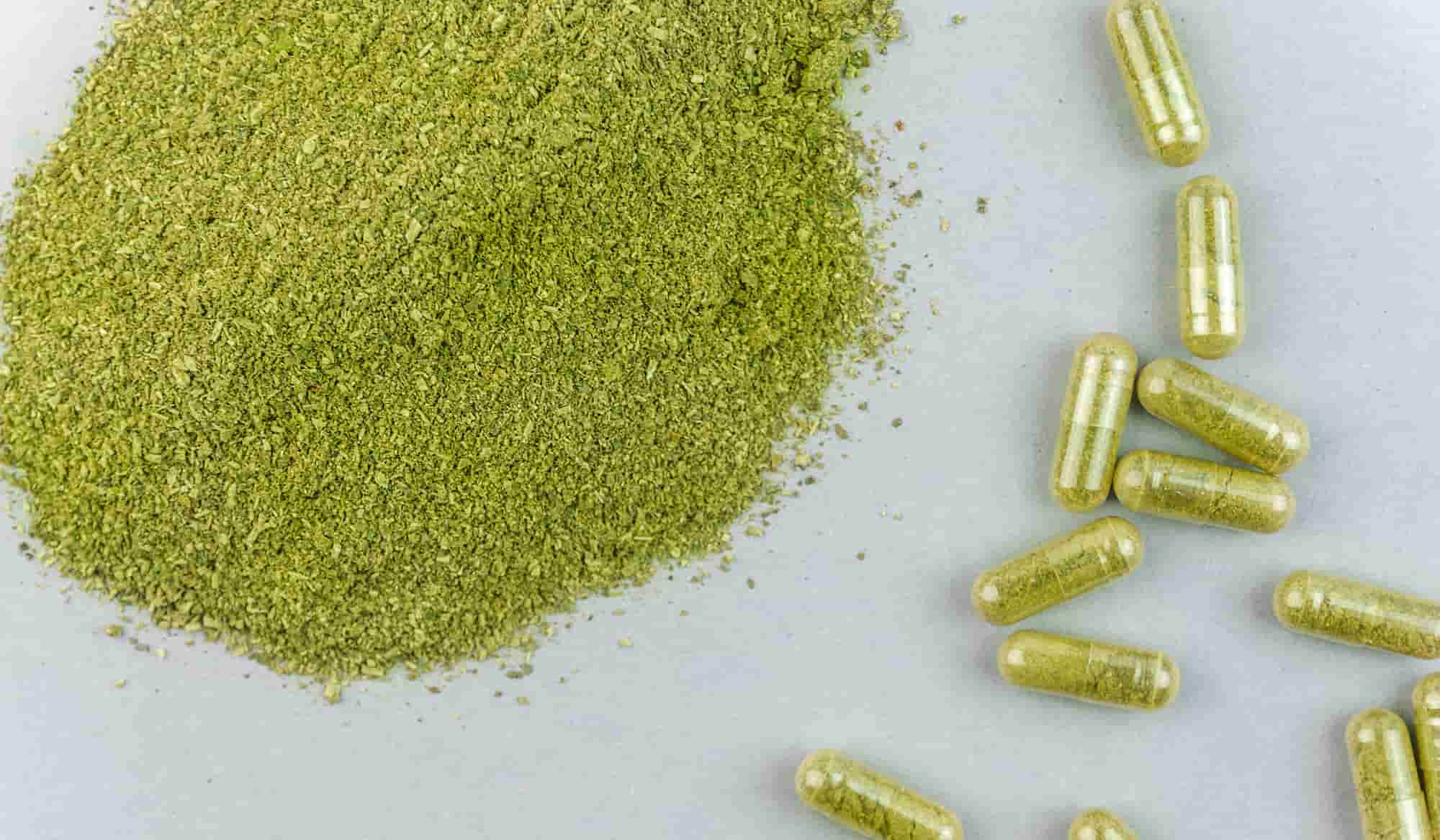
The gap between plant and product is the whole story. According to the FDA’s scientific assessment of 7-OH, the compound occurs in botanical kratom at no more than about 0.01 to 0.04 percent by dry weight, making up less than 2 percent of total alkaloid content. The concentrated tablets, shots, and gummies now sold in gas stations and smoke shops contain many times that amount. Someone chewing kratom leaf and someone taking a concentrated 7-OH tablet are not having the same pharmacological experience.
Compound | Potency (guinea pig ileum assay) | Presence in kratom leaf | What it means in practice |
|---|---|---|---|
7-OH | ~13x morphine, ~46x mitragynine | ~0.01 to 0.04% dry weight | Trace in the plant, concentrated in products |
Mitragynine | Baseline kratom alkaloid, weaker mu-opioid activity | Dominant alkaloid | Converts to 7-OH in the liver |
Morphine | Clinical reference point | Not present | The comparator FDA uses |
Potency figures from the FDA’s published assessment of 7-hydroxymitragynine. Assay results do not translate one-to-one into human dose equivalence.
FDA also reports that 7-OH produces respiratory depression with more than three times the potency of morphine. Respiratory depression is what makes opioid overdose fatal.
Why 7-hydroxymitragynine addiction develops quickly
Three findings from FDA’s review sit at the center of this.
Animals self-administer it at low doses. Peak self-administration occurred at 5 micrograms per infusion for 7-OH, compared with 50 micrograms per infusion for morphine. Animals worked for it, and they worked for it at a tenth of the dose.
It substitutes for morphine. In drug discrimination studies, animals trained to recognize morphine responded to 7-OH as though it were morphine, with complete generalization.
It produces conditioned place preference. Animals returned to the environment where they received it, the standard behavioral marker of a rewarding drug.
Chronic administration produced tolerance and a withdrawal syndrome comparable to morphine withdrawal. That combination, reward plus tolerance plus withdrawal, is the textbook profile of an addictive opioid.
Human data is thinner and observational rather than randomized, so the honest framing is this: the pharmacology is unambiguous, and the clinical picture reported by poison centers and treatment programs is consistent with it. U.S. poison centers documented 53 exposure cases between February and May 2025, 24 of them abuse-related, several with major clinical outcomes.
Signs of dependence
Physical dependence and addiction are related but not identical. Dependence means the body has adapted and withdrawal follows when use stops. Addiction, clinically substance use disorder, adds loss of control over use.
Common early signals:
- Needing more product to get the same effect
- Dosing on a schedule to stay ahead of feeling unwell
- Withdrawal symptoms in the morning or between doses
- Failed attempts to cut back or stop
- Spending on 7-OH crowding out other expenses
- Buying from multiple shops to keep supply steady
Risk of 7-hydroxymitragynine addiction is higher with a personal or family history of substance use disorder, untreated mental health conditions, chronic pain, or prior opioid use.
What 7-OH withdrawal looks like
Withdrawal from 7-OH follows an opioid-type pattern. NIDA reports that people may experience mild to moderate withdrawal when they stop regular kratom use, and clinicians treating concentrated 7-OH dependence generally see a sharper version of that.
Published research has not established a 7-OH-specific human withdrawal timeline. Product potency varies enormously between brands, so onset and duration vary with it. The table below reflects opioid-type withdrawal patterns clinicians commonly observe, not a validated 7-OH schedule.
Symptom cluster | Typical onset | Typical peak | Usual course |
|---|---|---|---|
Anxiety, irritability, restlessness | Within the first day | Days 2 to 3 | Improves over 5 to 14 days |
Muscle aches, joint pain, sweating | First 1 to 2 days | Days 2 to 3 | Improves over 3 to 10 days |
Nausea, vomiting, diarrhea | First 1 to 2 days | Days 1 to 3 | Improves over 3 to 7 days, dehydration is the risk to watch |
Insomnia, tremor | Days 1 to 2 | Days 2 to 4 | Sleep can stay disrupted for weeks |
Cravings, low mood | Days 1 to 3 | First week | Can persist for weeks or months |
For a deeper breakdown, see our guide to 7-OH withdrawal symptoms and timeline, our overview of kratom withdrawal, and our explainer on opioid withdrawal symptoms and treatment options.
Can you overdose on 7-OH?
Yes. 7-OH depresses respiration more powerfully than morphine in laboratory measures, and overdose risk rises sharply when it is combined with other depressants.
Call 911 immediately for slow, shallow, or stopped breathing, blue or grey lips or fingertips, unresponsiveness, or gurgling and snoring sounds in someone who cannot be woken. Because 7-OH is an opioid agonist, naloxone can reverse an overdose. Naloxone is available without a prescription at pharmacies in California. If you or someone in your household uses 7-OH, keep it on hand.
The combinations that raise risk most are alcohol, benzodiazepines, prescription opioids, and sleep medication. If more than one substance is involved, polysubstance detox is a different clinical problem than detox from 7-OH alone, and it needs to be planned that way.
When medical detox is the safer choice
Stopping alone is reasonable for some people. For others it carries real risk. Supervised detox is the safer route when any of the following apply:
- Heavy daily use, or use of high-concentration extracts
- A previous opioid use disorder
- Concurrent alcohol, benzodiazepine, or opioid use
- Failed attempts to stop at home
- Pregnancy
- Significant medical conditions, including cardiac or liver disease
- Co-occurring psychiatric conditions
Ojai Recovery provides medically supervised 7-OH detox at our Oak View facility, with physician oversight and 24/7 monitoring. Our approach to medical supervision and safety protocols explains what that monitoring involves.
“7-OH behaves like a conventional opioid at the receptor level, and concentrated products behave like potent ones. When someone has been using daily, we plan the withdrawal rather than letting it happen to them.” Gina Rossetti, MD, Medical Director, Ojai Recovery
Is 7-OH legal right now?
As of September 2026, concentrated 7-OH products are not yet federally scheduled, though that is actively changing.
- July 2026. The DEA filed a notice of intent to temporarily place 7-OH above a specified threshold into Schedule I. The proposed thresholds are more than 0.050 percent 7-OH by dry weight for botanical kratom, or more than 1.00 milligram of 7-OH per article for concentrated and synthetic forms. This is a proposed rule and has not taken effect.
- August 26, 2026. A separate DEA temporary scheduling order did take effect, covering three related synthetics: mitragynine pseudoindoxyl, MGM-15, and MGM-16. It runs through August 26, 2028. It does not cover 7-OH itself.
- State level. Several states have moved independently. Check current state law where you live.
The practical takeaway is that legal availability says nothing about addiction risk. 7-OH is sold over the counter today and is still a potent opioid agonist.
How 7-OH shows up on a drug test
Standard workplace urine screens do not detect kratom alkaloids. Routine immunoassay panels were never designed to look for mitragynine or 7-OH, so a negative result on a standard test does not rule out use.
Detection requires a targeted liquid chromatography tandem mass spectrometry panel, usually written as LC-MS/MS, that specifically lists mitragynine and 7-OH. Not every lab offers one, and turnaround varies by lab. If a screen matters clinically, ask the ordering provider to specify the targeted panel rather than assuming a standard panel covers it.
Treatment options
Care is matched to how severe the withdrawal is, what else is in the picture medically, and what support exists at home.
Medically supervised detox. Clinicians manage symptoms directly, with medication for autonomic symptoms, nausea, pain, and sleep, and monitor for complications. For opioid-type dependence, clinicians may also discuss buprenorphine, which requires careful timing at initiation.
Residential treatment. Residential treatment provides structure and clinical support after stabilization.
Step-down care. Our partial hospitalization program in Ventura and outpatient treatment let people continue treatment while rebuilding a normal routine. We also coordinate IOP referrals where that level fits better.
Integrated mental health care. Many people using 7-OH are managing anxiety, depression, chronic pain, or a trauma history alongside it. Treating only the substance tends not to hold. We address co-occurring mental health conditions alongside the substance use, and our trauma-informed care shapes how detox itself is handled.
Network status and benefit levels vary by plan. A free, confidential benefits check tells you where you stand before you commit to anything.
Frequently asked questions
What are the side effects of 7-OH?
Short-term effects mirror other opioids: nausea, vomiting, constipation, itching, sweating, drowsiness, dizziness, and slowed breathing. Regular use commonly adds constipation, disrupted sleep, low mood, reduced appetite, and sexual dysfunction. The serious risk is respiratory depression, which FDA measured at more than three times the potency of morphine. Poison-center reports have included cases with major clinical outcomes.
What is a common 7-OH dose?
There is no established safe or medically accepted dose. 7-OH is not an approved medicine, so no dosing standard exists, and independent testing has repeatedly found that product labels do not match actual content. Two tablets from different brands, or different batches of the same brand, can differ substantially in strength. That unpredictability is a large part of why overdose happens. If you are currently using and planning to stop, tell a clinician roughly how much and how often so they can plan a taper or detox safely. Do not adjust based on someone else’s amount.
What does 7-OH feel like?
Users describe opioid-type effects: pain relief, warmth, sedation, and a sense of ease, sometimes with a short stimulant-like phase first at lower amounts. Those effects fade as tolerance builds, which is the point at which many people find they are dosing to feel normal rather than to feel good. Animal studies back this up. 7-OH produces conditioned place preference and substitutes for morphine in drug discrimination testing.
Can you overdose on 7-OH?
Yes. Overdose presents as opioid overdose does: slow or stopped breathing, unresponsiveness, blue or grey lips, and pinpoint pupils. Risk rises sharply when 7-OH is combined with alcohol, benzodiazepines, or other opioids. Call 911 and give naloxone if it is available. Naloxone works on 7-OH because 7-OH is an opioid agonist.
Is 7-OH the same as kratom?
No. 7-OH is one alkaloid within kratom, present in the leaf at no more than about 0.01 to 0.04 percent by dry weight. Concentrated 7-OH products isolate and multiply it. Someone who has used kratom leaf without problems can still develop dependence quickly on concentrated 7-OH.
How long does it take to become dependent on 7-OH?
There is no fixed number, and anyone offering one is guessing. Dependence develops faster with higher potency, more frequent dosing, and prior opioid exposure. Because concentrated products are considerably stronger than leaf kratom, people often report tolerance and morning withdrawal within weeks rather than months.
Can you stop 7-OH on your own?
Some people do, particularly with light or short-term use. It becomes risky with heavy daily use, prior opioid use disorder, pregnancy, significant medical conditions, or concurrent alcohol or benzodiazepine use. If quitting at home has failed before, that is useful information rather than a personal failure, and it usually means a supervised plan will work better.
Does insurance cover 7-OH detox?
Ojai Recovery is in network with Medi-Cal and with select private carriers, and we also accept private insurance and self-pay. Network status and benefit levels vary by plan, which is why we run a free, confidential benefits check before anything is committed to. Verify your insurance or call (805) 273-8798.
When should I call 911 instead of admissions?
Call 911 for slow or stopped breathing, unresponsiveness, seizures, chest pain, or confusion. Call admissions for withdrawal symptoms, cravings, or questions about detox and coverage. If you are unsure which situation you are in, treat it as an emergency.
Getting help
If 7-OH has become something you plan your day around, that is worth taking seriously, and it responds to treatment. Our admissions team can walk you through what detox looks like, check your benefits, and arrange an assessment. Same-day admission is often available, and every conversation is confidential.
Call (805) 273-8798. Ojai Recovery, 158 Rockaway Rd, Oak View, CA 93022. Joint Commission accredited, DHCS licensed #560086BP, LegitScript certified.
Medically reviewed by Gina Rossetti, MD, Medical Director, Ojai Recovery · Last updated: September 2026
This content is for informational purposes only and is not a substitute for professional medical advice, diagnosis, or treatment. Always consult a qualified healthcare provider about your specific situation. If you are in crisis, call or text 988 (Suicide and Crisis Lifeline).
External references used on this page: U.S. Food and Drug Administration, 7-Hydroxymitragynine: An Assessment of the Scientific Data; FDA, Hiding in Plain Sight: 7-OH Products; National Institute on Drug Abuse, Kratom; Federal Register, DEA temporary scheduling documents (July and August 2026); PubChem compound record CID 44301524.